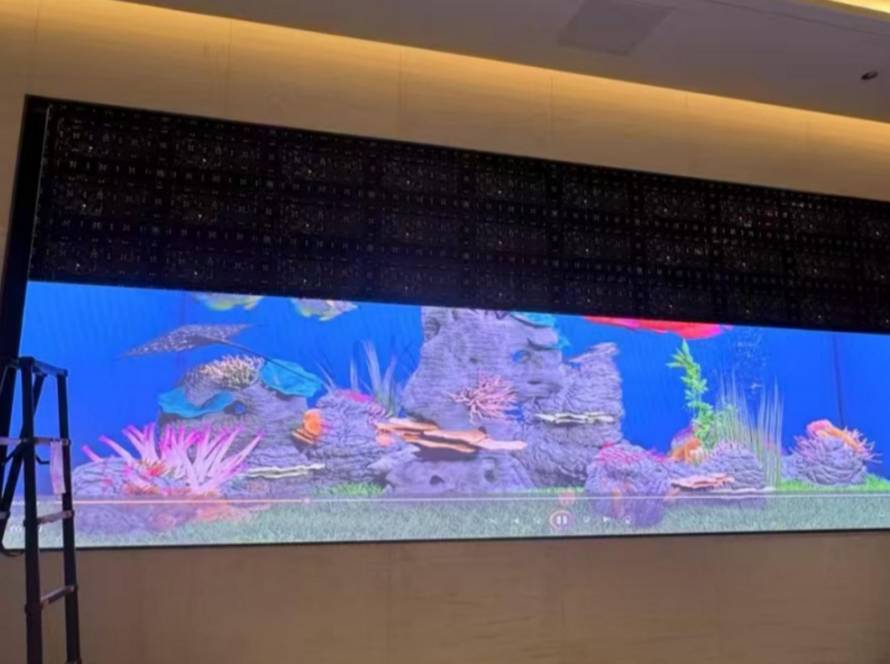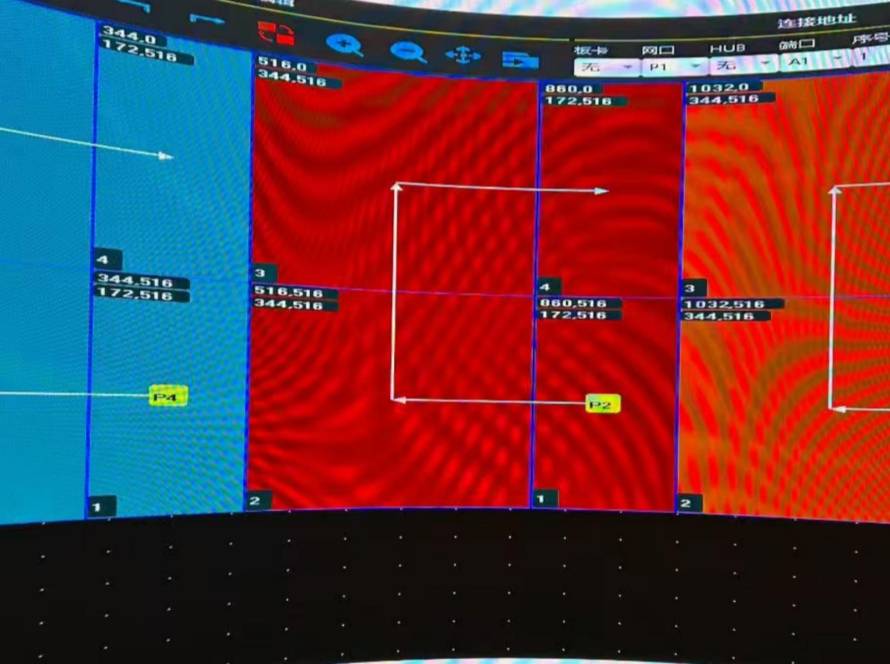


Choosing the right LED display is an important decision for any business. Whether you’re planning to install a screen for advertising, retail, events, or a conference room, selecting the right model can improve visual impact while maximizing your investment.
This guide highlights the key factors to consider before purchasing an LED display.
1. Define Your Application
The first step is to identify where the LED display will be used.
Common applications include:
- Outdoor advertising
- Retail stores
- Shopping malls
- Conference rooms
- Exhibition halls
- Sports venues
- Control rooms
Different applications require different brightness levels, protection ratings, and pixel pitches.
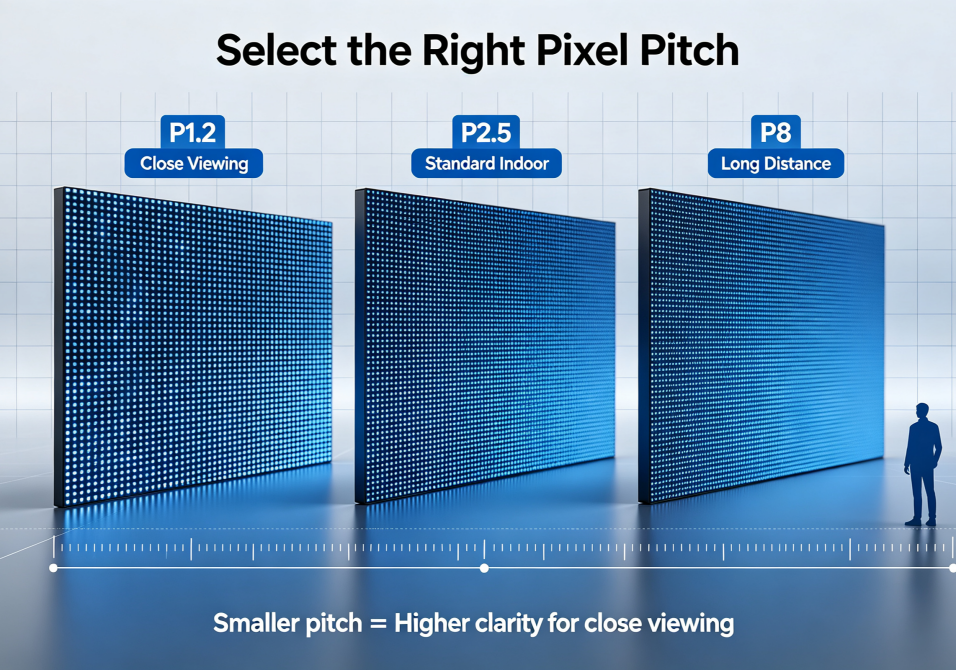
2. Select the Right Pixel Pitch
Pixel pitch refers to the distance between two adjacent LED pixels. It directly affects image quality and recommended viewing distance.
General recommendations:
| Pixel Pitch | Recommended Viewing Distance |
| P1.25–P2 | 1–2 meters |
| P2.5–P3 | 2–4 meters |
| P4–P5 | 4–6 meters |
| P6 and above | 6 meters or more |
A smaller pixel pitch delivers sharper images but usually comes at a higher cost.
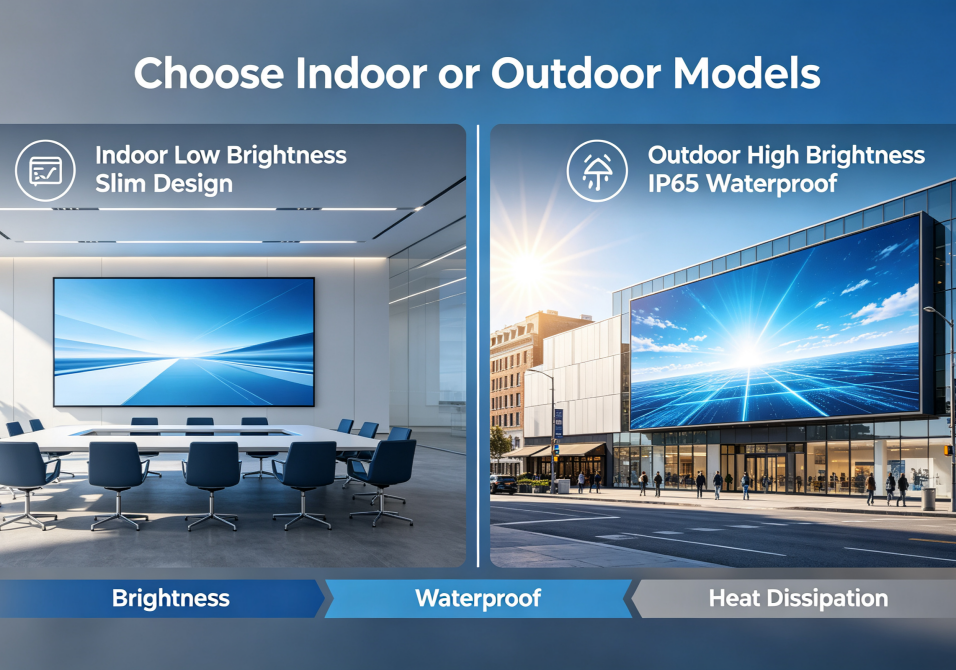
3. Choose Indoor or Outdoor Models
Indoor and outdoor LED displays are designed for different environments.
Indoor LED Displays
- Higher image resolution
- Lower brightness
- Lightweight design
- Suitable for close viewing
Outdoor LED Displays
- High brightness for sunlight visibility
- Waterproof and dustproof
- Weather-resistant cabinets
- Designed for long-term outdoor use
Selecting the correct type ensures reliable performance.
4. Consider Brightness
Brightness is measured in nits.
Typical recommendations:
- Indoor displays: 600–1,000 nits
- Semi-outdoor displays: 1,500–3,000 nits
- Outdoor displays: 4,500–6,500+ nits
The right brightness helps maintain clear visibility without unnecessary power consumption.
5. Check Refresh Rate
A higher refresh rate produces smoother images, especially for video recording and live broadcasting.
For most commercial applications, a refresh rate of 3,840Hz or higher is recommended.
6. Evaluate Installation and Maintenance
Before purchasing, consider how the display will be installed and serviced.
Questions to ask include:
- Does it support front maintenance or rear maintenance?
- Is installation straightforward?
- Can individual modules be replaced easily?
- Is there enough maintenance access?
Easy maintenance reduces downtime and operating costs.
7. Compare Energy Efficiency
Modern LED displays are designed to consume less power while maintaining high brightness.
Look for features such as:
- Automatic brightness adjustment
- Energy-saving power supplies
- Intelligent temperature control
Lower energy consumption can significantly reduce long-term operating costs.
8. Choose a Reliable Manufacturer
The quality of the manufacturer is just as important as the product itself.
A trusted supplier should provide:
- Consistent product quality
- Technical support
- Warranty service
- Spare parts availability
- Customization options
Working with an experienced manufacturer helps ensure a smoother project from installation to after-sales support.
Conclusion
Choosing the right LED display involves more than comparing prices. Factors such as pixel pitch, brightness, installation environment, maintenance, and manufacturer support all play an important role in long-term performance. By understanding your application and selecting the right specifications, you can invest in an LED display that delivers excellent image quality, reliable operation, and long-lasting value.