

One of the most common questions buyers ask is, “How much does an LED display cost?” The answer depends on several factors, including the screen size, pixel pitch, installation environment, and project requirements.
Instead of focusing on price alone, it’s important to understand what influences the total cost so you can choose the best solution for your budget.
1. Pixel Pitch
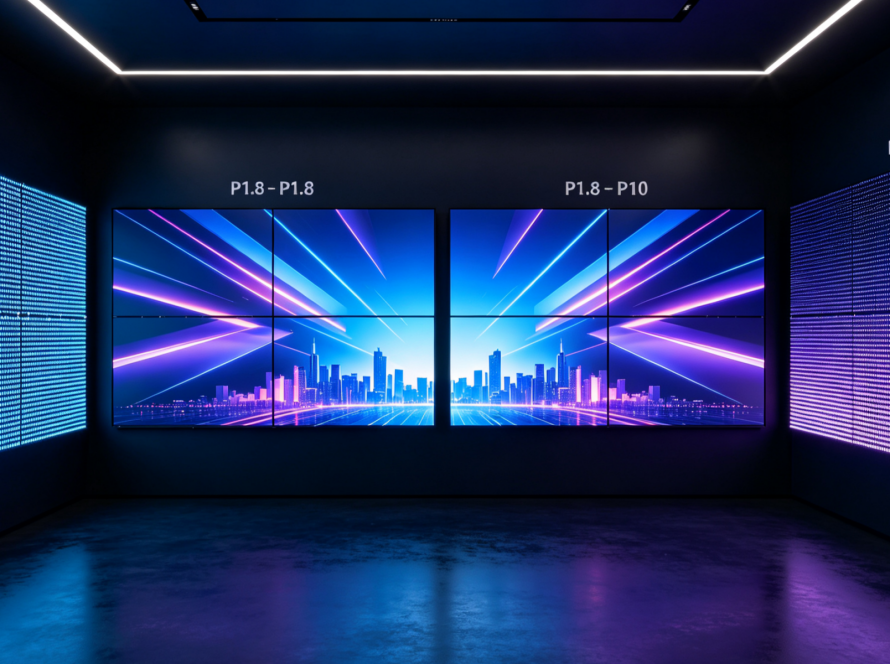
Pixel pitch is one of the biggest factors affecting the price of an LED display.
Displays with a smaller pixel pitch contain more LEDs per square meter, resulting in higher resolution and better image quality. Because they require more components and more advanced manufacturing, they generally cost more than displays with a larger pixel pitch.
For example, a P2.5 indoor display is typically more expensive than a P5 display of the same size.
2. Screen Size
The larger the display, the higher the total project cost.
A larger screen requires:
- More LED cabinets
- More power supplies
- Additional receiving cards
- More installation materials
When planning your budget, consider the total display area rather than just the unit price.
3. Indoor or Outdoor Installation
Outdoor LED displays usually cost more than indoor models because they require:
- High brightness for sunlight visibility
- Waterproof and dustproof protection
- Stronger cabinet structures
- Better heat dissipation
Indoor displays, on the other hand, are designed for controlled environments and generally have lower manufacturing costs.
4. Display Quality
Not all LED displays are built to the same standard.
Product quality can vary based on:
- LED chip brand
- Cabinet material
- Refresh rate
- Color consistency
- Control system
- Manufacturing process
A higher-quality display often provides better reliability, longer service life, and lower maintenance costs.
5. Installation Method
Installation costs depend on the project requirements.
Common installation options include:
- Wall-mounted
- Hanging
- Floor-standing
- Curved installation
- Custom structures
Projects requiring steel structures, electrical work, or customized mounting systems may increase the overall investment.
6. Additional Components
Besides the LED display itself, your project may also require:
- LED controller
- Video processor
- Power distribution cabinet
- Mounting structure
- Spare modules
- Flight cases (for rental displays)
Including these components in your budget helps avoid unexpected costs later.
7. Customization Requirements
Many commercial projects require customized solutions, such as:
- Custom cabinet sizes
- Front maintenance design
- Special shapes
- Company logo branding
- Interactive features
Customization can increase the total cost but also ensures the display fits your specific application.
Is the Cheapest LED Display the Best Choice?
Not necessarily.
A lower purchase price may result in:
- Higher maintenance costs
- Shorter product lifespan
- Lower brightness
- Poor color consistency
- Limited technical support
Choosing a reliable manufacturer with proven product quality often provides better long-term value.
How to Get an Accurate Quote
To receive an accurate quotation, it’s helpful to prepare the following information:
- Display dimensions
- Indoor or outdoor use
- Preferred pixel pitch
- Installation method
- Country or project location
- Application (advertising, retail, conference room, stadium, etc.)
Providing these details allows the supplier to recommend the most suitable solution and prepare a more precise quotation.
Conclusion

The cost of an LED display depends on much more than the screen itself. Factors such as pixel pitch, display size, installation environment, product quality, and customization all influence the final price. Rather than choosing the lowest-cost option, focus on selecting an LED display that offers the right balance of performance, durability, and long-term value. A well-designed solution will deliver better reliability and a lower total cost of ownership over its lifetime.