

Pixel pitch is one of the most important factors when choosing an LED display. It affects image clarity, viewing distance, and overall cost. Selecting the right pixel pitch ensures your audience enjoys clear, sharp visuals without paying for unnecessary resolution.
In this guide, we’ll explain what pixel pitch is and how to choose the best option for your project.
What Is Pixel Pitch?
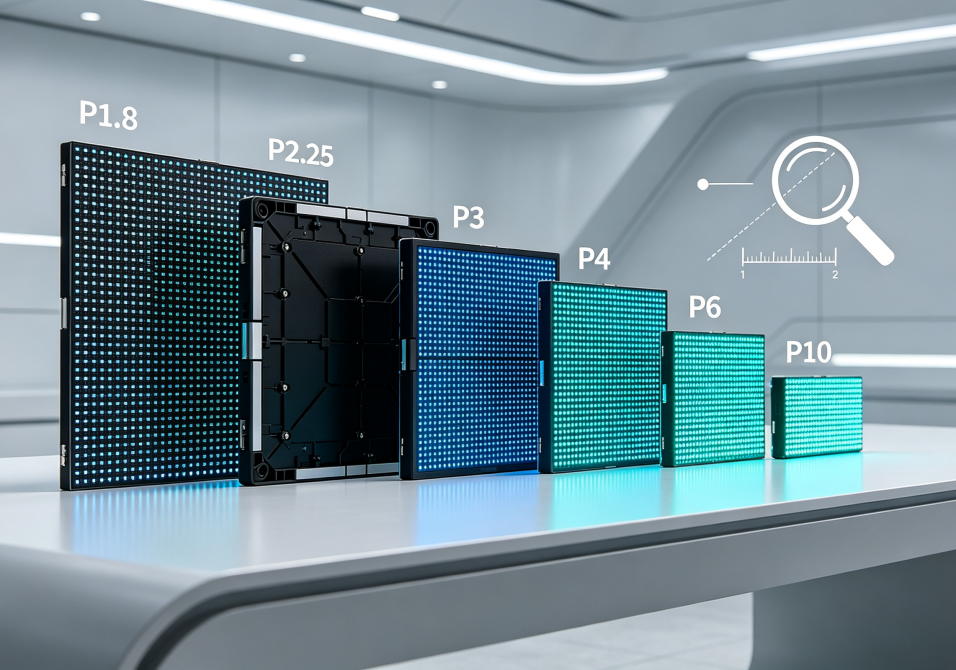
Pixel pitch is the distance between the center of two adjacent LED pixels, measured in millimeters (mm).
A smaller pixel pitch means the LEDs are packed closer together, producing higher image resolution and better clarity for close viewing.
A larger pixel pitch has fewer pixels per square meter, making it more suitable for long-distance viewing and reducing overall cost.
How Viewing Distance Affects Pixel Pitch
The closer viewers are to the screen, the smaller the pixel pitch should be.
Here’s a general guideline:
| Pixel Pitch | Recommended Viewing Distance | Common Applications |
| P1.25 – P1.86 | 1–2 m | Meeting rooms, control rooms |
| P2 – P2.5 | 2–3 m | Retail stores, showrooms |
| P3 | 3–5 m | Conference halls, indoor advertising |
| P4 – P5 | 5–8 m | Shopping malls, churches |
| P6 – P10 | 8 m+ | Outdoor billboards, stadiums |
These are general recommendations, and the ideal choice may vary depending on your content and installation environment.
Indoor vs. Outdoor Pixel Pitch
Indoor LED Displays
Indoor displays are viewed from shorter distances, so they typically use smaller pixel pitches, such as P1.5, P2, or P2.5. These provide sharp text, detailed graphics, and high-resolution videos.
Outdoor LED Displays
Outdoor displays are usually viewed from farther away. Pixel pitches like P4, P5, P6, or P8 are commonly used because they offer excellent visibility while keeping costs under control.
Does a Smaller Pixel Pitch Mean Better?
Not always.
While smaller pixel pitches deliver higher resolution, they also:
- Cost more
- Require more LEDs
- Increase installation costs
- May not provide noticeable benefits for long-distance viewing
For example, installing a P2 display on a highway billboard would offer little advantage because drivers view the screen from a considerable distance.
The best choice is one that matches your actual viewing distance and application.
Other Factors to Consider
Besides pixel pitch, you should also evaluate:
- Screen size – Larger displays may use larger pixel pitches.
- Viewing distance – One of the most important factors.
- Content type – Videos and detailed images benefit from finer pixel pitches.
- Installation location – Indoor and outdoor environments have different requirements.
- Budget – Balance image quality with project costs.
Conclusion
Choosing the right pixel pitch is about finding the balance between image quality, viewing distance, and budget. A smaller pixel pitch isn’t always the best option—it simply suits applications where viewers are closer to the screen.
If you’re unsure which pixel pitch is right for your project, consult an experienced LED display manufacturer. They can recommend the most suitable solution based on your installation environment and viewing requirements.